 AI & Technology
Understanding AI Credits: How Generation Costs Work
A transparent breakdown of SwapFlow's credit system, pricing tiers, and strategies for maximizing value
Understanding AI Credits: How Generation Costs Work
AI generation is not free. Behind every generated video, image, or audio clip is significant computational infrastructure --- GPU clusters, model inference, storage, and bandwidth. The challenge for any platform offering AI generation tools is translating these real costs into a pricing model that is transparent, predictable, and fair.
SwapFlow uses a credit-based system designed to give creators control over how they spend their generation budget. Rather than charging per model or per feature, credits serve as a universal currency across all generation types. This guide explains how the system works, what determines cost, and how to get the most value from every credit.
How the Credit System Works
Credits are SwapFlow's unit of generation currency. Every AI generation --- whether it is a video, image, audio clip, or processing task --- consumes a specific number of credits. The number consumed depends on two primary factors:
- The model used: More powerful, higher-quality models cost more credits per generation
- The generation parameters: Resolution, duration, complexity, and other settings affect cost
This approach means creators always know what a generation will cost before they run it. There are no surprise charges, no variable pricing based on server load, and no hidden fees for specific features.
Why Credits Instead of Per-Generation Pricing
A credit system offers several advantages over alternatives:
- Flexibility: Credits work across all generation types, so creators are not locked into spending on a specific feature they may not use every month
- Predictability: Monthly credit allocations make budgeting straightforward
- Transparency: Credit costs are displayed before generation, eliminating guesswork
- Efficiency incentives: The system naturally encourages smart model selection --- using fast, affordable models for drafts and reserving premium models for final output
Pricing Tiers
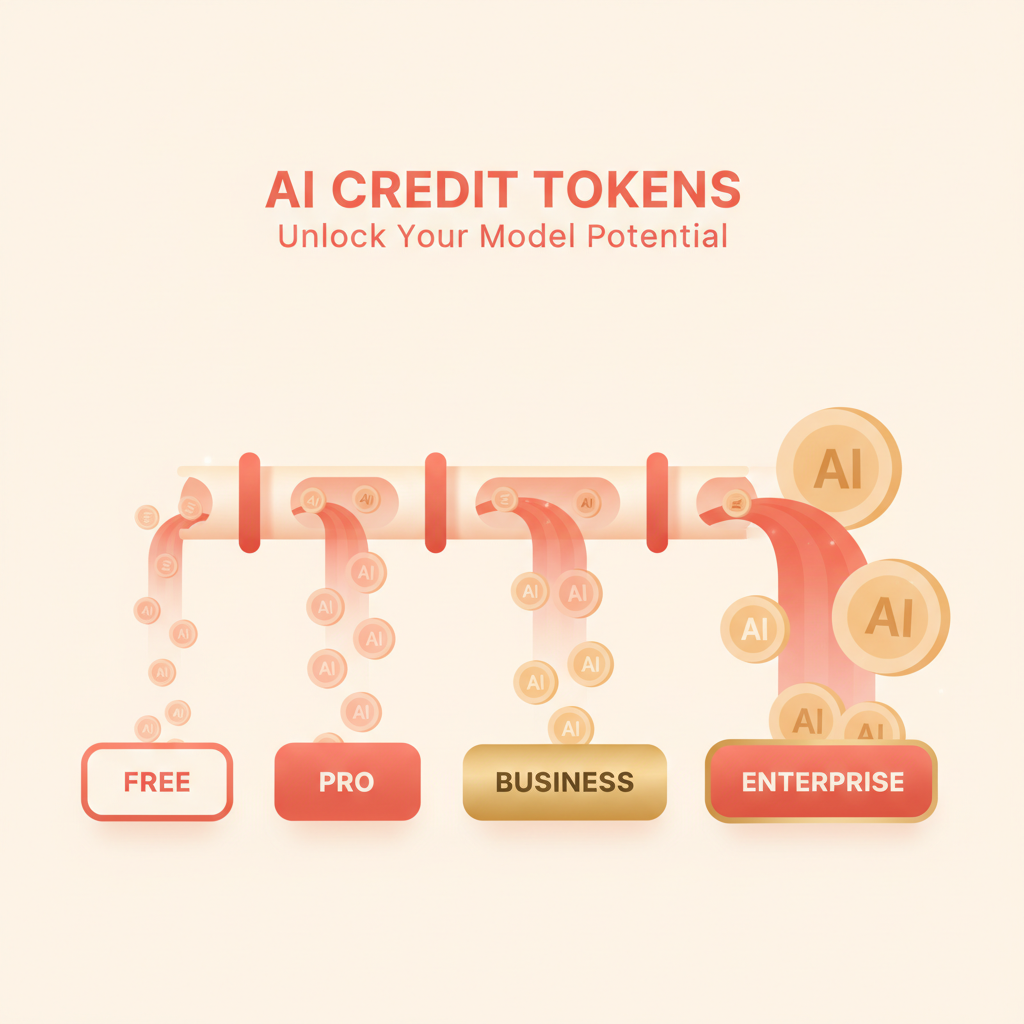
SwapFlow offers four distinct tiers, each designed for different usage levels and needs.
Free Tier: 20 Credits (One-Time)
The Free tier provides 20 credits as a one-time allocation for new users. This is not a recurring monthly allowance --- it is a starter balance designed for exploration and evaluation.
With 20 credits, a new user can:
- Generate several images across different models
- Produce a short AI video
- Test text-to-speech output
- Explore the platform's capabilities before committing to a paid plan
The Free tier is intentionally limited. Its purpose is to let potential users experience the quality and workflow of SwapFlow's tools firsthand, not to support ongoing production.
Pro Tier: 1,100 Credits/Month
The Pro tier is designed for individual creators and small-scale content producers. At 1,100 credits per month, it supports a regular content production workflow that might include:
- Daily social media image generation
- Weekly video content production
- Regular voiceover generation
- Experimentation with new models and techniques
Pro is the right fit for solo creators, freelancers, and small teams who produce content consistently but do not require enterprise-scale volume.
Business Tier: 2,900 Credits/Month
The Business tier serves teams and growing brands with higher production demands. At 2,900 credits per month, it supports:
- Multi-platform content campaigns
- Higher-volume video production
- Multilingual content creation
- Multiple team members generating concurrently
The Business tier also increases concurrent generation limits, allowing multiple generations to run simultaneously. This matters for teams where several people may be producing content at the same time.
Enterprise Tier: 8,500 Credits/Month
The Enterprise tier is built for organizations with serious content production needs. At 8,500 credits per month, it supports high-volume operations including:
- Agency-scale content production for multiple brands
- Large-scale localization across many languages and markets
- Continuous content generation pipelines
- Maximum concurrent generation capacity
Enterprise accounts also receive priority support and higher rate limits to ensure production workflows are never bottlenecked by platform constraints.
Model Tiers: Why Some Generations Cost More
Not all AI models are equal in capability, and they are not equal in cost. SwapFlow organizes models into four tiers that reflect their computational requirements and output quality.
Turbo Tier (Lowest Cost)
Turbo models prioritize speed and efficiency. They generate output faster and consume fewer credits per generation. Quality is good but not at the absolute ceiling of what is available.
Best for: Drafts, rapid iteration, testing concepts, high-volume production, social media content where speed matters more than maximum fidelity.
Examples: Veo 3.1 Fast, Imagen 4 Fast, ElevenLabs Turbo 2.5, LTX 2.3 Pro, Ideogram V3 Turbo.
Standard Tier
Standard models represent the balanced middle ground --- strong quality at moderate credit cost. Most creators find that Standard models meet their needs for the majority of their content.
Best for: Regular content production, social media posts, product imagery, standard voiceovers, everyday video content.
Examples: Wan 2.6, Kling 2.6, Imagen 4, Seedream 3.0, Minimax Speech 2.8 Turbo.
Pro Tier
Pro models deliver premium quality with higher computational requirements. They produce output with finer detail, better coherence, and more sophisticated handling of complex prompts.
Best for: Flagship content, brand campaigns, professional presentations, content where quality is the primary differentiator.
Examples: FLUX 2 Max, Veo 3, Kling 3.0, Recraft V4 Pro, Dreamina 3.1, Minimax Speech 2.8 HD.
Premium Tier (Highest Cost)
Premium models represent the absolute best available quality. They consume the most credits but produce output that meets the highest professional standards.
Best for: Hero content, cinematic productions, high-stakes marketing materials, content that justifies maximum investment in quality.
Examples: Sora 2 Pro, Imagen 4 Ultra, GPT Image 1.5, ElevenLabs Dialogue V3, Runway Gen-4.
Optimizing Credit Usage
Smart credit management is the difference between running out mid-month and maintaining a productive workflow throughout the billing cycle. These strategies help creators maximize value.
Use the Tiered Workflow Approach
The single most effective credit optimization strategy is matching model tier to production stage:
- Concept phase: Use Turbo models to explore ideas rapidly. Generate 5-10 options at minimal credit cost.
- Selection phase: Review Turbo outputs, identify promising directions.
- Refinement phase: Regenerate selected concepts with Standard or Pro models for better quality.
- Final production: Use Premium models only for the final, publish-ready generation.
This approach can reduce credit consumption by 60-70% compared to using Premium models for every generation. Most concepts are discarded during exploration --- there is no reason to spend premium credits on content that will never be published.
Know When Turbo Is Good Enough
For many social media applications, Turbo-tier output is indistinguishable from Premium on mobile screens at standard viewing distances. Instagram Stories viewed on a phone screen do not require 2K Imagen 4 Ultra quality. A Turbo-tier image at standard resolution often serves the purpose equally well.
Consider the end viewer's experience:
- Mobile social media feeds: Turbo or Standard is typically sufficient
- YouTube thumbnails: Standard is usually enough; the image is displayed at small size
- Website hero images: Pro or Premium quality is worth the investment
- Print materials: Premium quality is essential
- Video content under 15 seconds: Standard models often suffice for social clips
Batch Strategically
When producing a series of related content --- a week's worth of social posts, a set of product images, variations for A/B testing --- plan the batch before generating. Decide in advance which pieces justify higher-tier models and which can use Turbo, then generate accordingly.
Monitor Credit Usage in the Dashboard
SwapFlow's dashboard provides real-time credit tracking, showing:
- Current credit balance
- Credits consumed this billing period
- Per-generation credit costs
- Usage trends over time
- Breakdown by generation type and model
Regular monitoring prevents end-of-month surprises and helps identify opportunities to optimize. If a creator notices that 40% of their credits go to video generations that never get published, that signals an opportunity to use Turbo models for video drafts.
Concurrent Generation Limits
Each pricing tier includes a limit on how many generations can run simultaneously. This affects workflow speed, particularly for teams.
| Tier | Concurrent Generations |
|---|---|
| Free | 1 |
| Pro | 2 |
| Business | 4 |
| Enterprise | 8 |
Concurrent limits determine how many jobs can be "in progress" at the same time. Once a generation completes, that slot opens for a new one. For individual creators, 2 concurrent slots (Pro) are typically sufficient. Teams benefit from the higher limits on Business and Enterprise plans, where multiple people may submit generations simultaneously.
BYOK: Bring Your Own Key
For power users and developers who want maximum flexibility and cost control, SwapFlow supports Bring Your Own Key (BYOK). This option allows users to connect their own API keys from supported AI providers.
How BYOK Works
- The user obtains an API key directly from a supported AI provider
- The key is securely stored in SwapFlow (encrypted at rest)
- Generations using that provider's models are billed directly to the user's account with the provider
- SwapFlow credits are not consumed for BYOK generations
When BYOK Makes Sense
BYOK is advantageous when:
- Volume exceeds plan credits: High-volume users may find direct API pricing more cost-effective than purchasing additional credit packs
- Specific provider relationships: Organizations with existing enterprise agreements with AI providers can leverage negotiated rates
- Billing consolidation: Teams that prefer to consolidate AI spending under a single provider account
- Unlimited generation needs: Removing the credit ceiling entirely for specific model providers
When Standard Credits Are Better
For most users, the standard credit system is simpler and more cost-effective than BYOK:
- No need to manage multiple API accounts and billing relationships
- Credits work across all models from all providers in one unified system
- SwapFlow's bulk pricing often matches or beats individual API rates
- No technical setup required
Making the Right Plan Choice
Choosing the right tier comes down to honest assessment of production needs:
- Just exploring? Start with the Free tier. Twenty credits provide enough to evaluate the platform's capabilities and determine whether SwapFlow fits the workflow.
- Solo creator with regular output? Pro provides enough credits for consistent daily content production with room for experimentation.
- Growing team or brand? Business supports multi-person workflows with higher concurrent limits and sufficient credits for campaign-scale production.
- Agency or high-volume operation? Enterprise delivers the credit volume and concurrent capacity needed for production at scale.
Every paid tier can be supplemented with additional credit packs if a particular month requires more generation than usual. And for users whose needs consistently exceed their tier, upgrading is straightforward.
Transparency as a Principle
Credit costs are always visible before a generation begins. SwapFlow displays the exact credit cost based on the selected model, resolution, duration, and other parameters. There are no post-hoc charges, no variable rates, and no hidden multipliers.
This transparency extends to the dashboard, where every credit expenditure is logged and categorized. Creators can review exactly where their credits went, identify patterns, and make informed decisions about future spending.
AI generation costs real resources, and a fair pricing model acknowledges that reality while giving creators the tools to manage their spending intelligently. SwapFlow's credit system is designed to do exactly that.